


Shoulder Impingement Causes Symptoms and Treatment Options - An Article by Orthopedic Surgeon in Pune

That sharp pinch when you lift your arm, reach for a shelf, wear a shirt, or sleep on one side can be more than “normal shoulder pain”. It may be shoulder impingement syndrome, a common problem where the soft tissues inside the shoulder get squeezed during movement.
The good news is that many people improve with the right care. Rest, correct exercises, posture changes, medicines, and guided treatment can reduce pain and help the shoulder move better again. Some people need scans or advanced treatment, and a smaller group may need surgery.
This guide explains shoulder impingement in simple language, so you can understand what’s happening inside the shoulder and what treatment paths are available. If you’re in Pune, you can visit Dr. Sunny Dole in Kothrud or Hinjewadi for proper evaluation and treatment.
This article is for general information only. It doesn’t replace a check-up by an orthopaedic doctor.

What shoulder impingement means in simple words
Your shoulder is a very mobile joint. It lets you lift, rotate, push, pull, throw, and reach behind your back. This movement is possible because of a group of muscles and tendons called the rotator cuff.
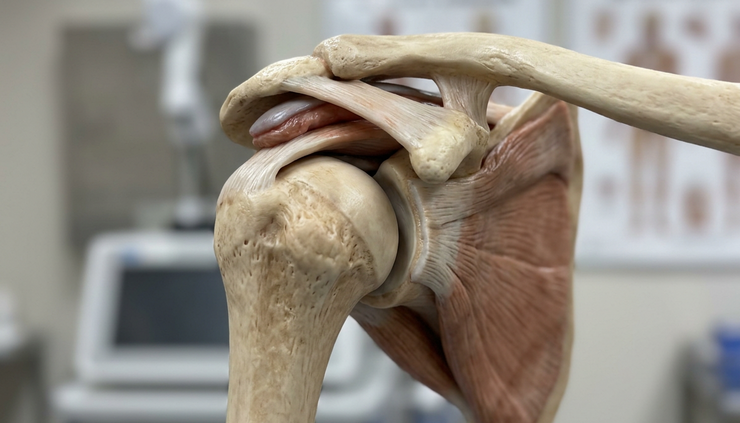
A tendon is like a strong rope that connects muscle to bone. In the shoulder, the rotator cuff tendons pass through a narrow space under a bony roof called the acromion. A soft cushion called the bursa also sits there to reduce friction.
Shoulder impingement happens when this space becomes too tight or irritated. When you raise your arm, the rotator cuff tendon or bursa may get squeezed. That squeezing causes pain, swelling, and difficulty lifting the arm.
Think of it like a rope moving through a narrow tunnel. If the tunnel becomes tighter, or the rope becomes swollen, the rope starts rubbing. Over time, it hurts more.
Common orthopaedic references describe shoulder impingement as a condition where the rotator cuff tendons and bursa are irritated or compressed during shoulder movement, especially overhead movement.
The parts involved
The main parts usually involved are:
Rotator cuff tendons These help lift and rotate the arm.
Bursa This is a small fluid-filled cushion that helps the tendon glide smoothly.
Acromion This is the bony roof above the rotator cuff.
Shoulder blade movement The shoulder blade must move properly when the arm lifts.
Posture and muscle control Weakness or stiffness can change how the shoulder moves.
When one part is not working well, the whole shoulder can feel painful.
Common causes of shoulder impingement
Shoulder impingement does not usually happen from one single reason. It often builds up over time. Some people get it because of their work. Some get it from sports or gym activity. Some have body structure that makes the space inside the shoulder naturally narrow.
Repetitive overhead activity
This is one of the most common causes. When you lift your arm again and again, the rotator cuff can get overloaded.
Examples include:
Painting ceilings or walls
Lifting objects onto high shelves
Swimming
Badminton, tennis, cricket bowling, or throwing sports
Gym exercises done with poor form
Construction work
Electrical work above shoulder level
Repeated household reaching and cleaning
In Pune, many people ignore early shoulder pain because they’re busy with work, commuting, home duties, and exercise. The pain may start as a mild pinch, then slowly become an everyday problem.
Poor posture
Slouched posture can change the position of your shoulder blade. When the upper back is rounded and the shoulders fall forward, the space under the acromion can become smaller.
This is common in people who sit for long hours, drive two-wheelers for long distances, use laptops, or look down at phones for many hours.
Poor posture does not mean you did something “wrong”. It just means your muscles and joints may need correction and strengthening.
Weak rotator cuff muscles
The rotator cuff muscles keep the shoulder joint centred. If these muscles are weak, the upper arm bone may move slightly upward during lifting. This can increase rubbing inside the shoulder.
Weakness can happen because of:
Lack of exercise
Injury
Age-related tendon changes
Wrong gym technique
Pain that makes you avoid using the arm
Tight muscles and stiff joints
A tight chest, stiff upper back, or stiff shoulder capsule can disturb normal shoulder motion. When one area does not move well, another area takes extra load.
For example, if your upper back is stiff, your shoulder may compensate when you try to reach overhead.
Anatomical factors
Some people have body structure that gives less space to the rotator cuff. The shape of the acromion can vary from person to person. In some people, it may be more hooked or curved. This can increase the chance of tendon rubbing.
Bone spurs can also develop with age or long-term irritation. These small bony growths may reduce space further.
Tendon swelling or bursitis
If the rotator cuff tendon becomes swollen, it takes up more space. If the bursa becomes inflamed, that also adds pressure. The shoulder then becomes painful even with simple movements.
This is why early treatment matters. If the cycle of rubbing, swelling, and pain continues, it can become harder to move the shoulder freely.
Rotator cuff tear
Shoulder impingement and rotator cuff tears can be linked. Long-term rubbing can weaken a tendon. A sudden fall or heavy lifting can also tear it.
A small tear may cause pain and weakness. A bigger tear may make it very hard to lift the arm.
Not every shoulder impingement has a tear, and not every tear needs surgery. A proper clinical check-up and scans help decide the best path.
Symptoms you may notice
Shoulder impingement symptoms can be mild at first. Many people say, “It only hurts when I lift my arm,” so they keep using it. Later, pain may disturb sleep and daily work.
Pain when lifting the arm
The classic symptom is pain when raising the arm to the side or front. The pain often occurs between shoulder level and overhead level.
You may feel:
A pinch on the outer side of the shoulder
Pain when reaching up
Pain while wearing a shirt
Pain while combing hair
Pain while taking something from a high shelf
Some people feel pain more in the upper arm than the shoulder. This can be confusing, but shoulder problems commonly refer pain to the outer upper arm.
Pain at night
Night pain is common. Sleeping on the painful side can press the shoulder and irritate the inflamed tissues.
Some people wake up when they turn in bed. Others cannot find a comfortable position.
A simple pillow support may help for a short time, but if night pain continues, it’s better to get checked.
Limited range of motion
You may notice that the arm doesn’t go up fully. You may avoid certain movements without realising it.
Common difficulties include:
Reaching behind the back
Wearing or removing clothes
Lifting a bag
Reaching into a cupboard
Washing hair
Doing overhead gym exercises
Pain can cause stiffness. Stiffness can cause more pain. This cycle should be broken early.
Weakness in the shoulder
Weakness may happen because of pain, muscle inhibition, or tendon injury.
You may feel that the arm is heavy. You may drop objects or avoid lifting even light items. If weakness is sudden or severe, you should see an orthopaedic doctor soon.
Clicking or catching
Some people feel clicking, catching, or grinding. This may come from irritated tendons, bursa, or uneven shoulder movement.
Clicking without pain is not always serious. Clicking with pain, weakness, or loss of movement needs evaluation.
Pain after activity
The shoulder may feel okay during activity but painful later. For example, after a gym session, swimming, cleaning, or sports, pain may increase in the evening or at night.
That delayed pain is a sign that the shoulder tissues are irritated.
When you should not ignore shoulder pain
Mild shoulder pain after unusual activity can settle with rest. But some signs need medical attention.
Visit an orthopaedic doctor if you have:
Pain lasting more than 1 to 2 weeks
Pain that keeps coming back
Night pain
Difficulty lifting the arm
Weakness
Pain after a fall or injury
Swelling or deformity
Numbness or tingling going down the arm
Fever with shoulder pain
Diabetes with increasing shoulder stiffness
Shoulder impingement can sometimes look like other conditions, such as frozen shoulder, cervical spine nerve pain, arthritis, rotator cuff tear, or calcium deposit in the tendon. A proper diagnosis matters because treatment changes with the cause.
How Dr. Sunny Dole may evaluate your shoulder
A good shoulder evaluation starts with listening. The doctor will ask when the pain started, what movements hurt, what work or sports you do, and whether there was an injury.
Then the shoulder is examined.
Physical examination
The doctor may check:
Where the pain is located
How high you can lift the arm
Shoulder rotation
Strength of rotator cuff muscles
Shoulder blade movement
Neck movement
Tenderness around the joint
Signs of stiffness or tear
Some tests are done by moving the arm in specific positions. These tests help find out if the rotator cuff or bursa is irritated.
X-ray
An X-ray can show bone shape, arthritis, bone spurs, calcium deposits, or old injury changes. It does not show tendons clearly, but it’s useful to check the bony structure.
Ultrasound or MRI
An ultrasound can show tendon swelling, bursitis, and some rotator cuff tears. It is quick and often useful.
An MRI shows soft tissues in more detail. It may be advised if pain is severe, symptoms are not improving, or a tear is suspected.
You don’t always need an MRI on day one. Many patients improve with clinical diagnosis and guided treatment. The decision depends on symptoms, examination, age, activity level, and response to initial care.
Treatment options for shoulder impingement
The right plan depends on your pain level, cause, age, activity needs, and whether there is a tendon tear. Most people start with non-surgical care.
The goal of shoulder impingement treatment is to reduce pain, improve movement, strengthen the shoulder, and stop the rubbing cycle.
Activity changes
This does not mean complete bed rest. It means avoiding painful overload while the shoulder heals.
You may need to reduce:
Overhead lifting
Heavy gym presses
Repeated throwing
Sudden jerky movements
Sleeping on the painful side
Carrying heavy bags on the affected side
Simple changes can make a big difference. For example, keep objects at waist or chest level for a few weeks instead of reaching overhead many times.
Ice or heat
Ice may help when pain is sharp or after activity. Use it for 10 to 15 minutes with a cloth between ice and skin.
Heat may help if the shoulder feels stiff or tight. Use gentle heat before stretching.
Avoid extreme heat or ice directly on skin.
Medicines
Pain-relief medicines may reduce pain and swelling for a short period. These should be taken only as advised by a doctor, especially if you have acidity, kidney problems, heart disease, blood pressure issues, or take blood thinners.
Medicines can reduce pain, but they do not correct muscle weakness, posture, or movement problems. That’s why they’re often combined with exercises.
Physiotherapy
Physiotherapy is a key part of treatment. A good programme does not only focus on the painful area. It also works on the shoulder blade, neck, upper back, chest tightness, and rotator cuff strength.
Physiotherapy may include:
Pain-relief methods
Gentle stretching
Shoulder blade control exercises
Rotator cuff strengthening
Posture correction
Upper back mobility work
Gradual return to work, sports, or gym
The exercise plan should be personalised. Doing random exercises from the internet can sometimes increase pain.

Physical therapy exercises often used
Do these only if they don’t increase pain. If pain is sharp, stop and get checked.
Pendulum exercise
Lean forward slightly and let the painful arm hang down. Move it gently in small circles.
This helps relax the shoulder without heavy load.
Wall walk
Stand facing a wall. Slowly “walk” your fingers upward as far as comfortable. Then come down slowly.
This helps improve range of motion.
Scapular squeeze
Sit or stand tall. Gently squeeze your shoulder blades back and down. Hold for a few seconds, then relax.
This helps shoulder blade control.
External rotation with a band
Keep the elbow close to your body. Hold a light resistance band and rotate the forearm outward slowly.
This strengthens the rotator cuff.
Chest stretch
Stand near a doorway and gently stretch the front of the chest. Avoid forcing the shoulder.
This can help if rounded shoulders are adding to impingement.
The best exercise is not the hardest one. The best exercise is the one you can do correctly, regularly, and without making pain worse.
Injections for shoulder impingement
If pain is high and you cannot do exercises properly, the doctor may suggest an injection around the inflamed area.
A commonly used injection is a steroid injection into the subacromial space. It can reduce inflammation and pain. This may help you sleep better and participate in physiotherapy.
An injection is not a permanent “cure” by itself. It works best when followed by exercise and correction of the cause.
The number and timing of injections should be decided by an orthopaedic doctor. Repeated injections without proper planning may not be ideal for tendon health.
Surgical treatment when non-surgical care is not enough
Most shoulder impingement cases improve without surgery. Surgery is considered when pain continues despite proper treatment, or when there is a significant structural problem like a rotator cuff tear.
The type of surgery depends on the diagnosis.
Arthroscopic subacromial decompression
This is a keyhole surgery. Small cuts are made around the shoulder, and a camera is used to see inside.
The surgeon may remove inflamed bursa or extra bone that is reducing space. The aim is to give the rotator cuff more room to move.
Rotator cuff repair
If there is a rotator cuff tear, the tendon may need repair. This can often be done with arthroscopy.
Recovery takes time because tendons heal slowly. Physiotherapy after surgery is very important.
Removing bone spurs or treating other problems
If bone spurs, calcium deposits, or other issues are present, the surgeon may treat them during the procedure.
Surgery is not chosen only based on pain. It depends on many things, including scan findings, weakness, duration of symptoms, daily needs, and response to physiotherapy.

Recovery time and what to expect
Recovery is different for each person. Mild irritation may settle in a few weeks with proper care. Long-standing pain, weakness, or tendon damage may take longer.
A common recovery path looks like this:
Stage | Main focus | What it may feel like |
Early stage | Reduce pain and irritation | Less night pain, easier daily movements |
Middle stage | Improve movement and strength | Better lifting, less pinching |
Later stage | Return to full activity | Gradual return to gym, sport, or overhead work |
If surgery is done, recovery is more structured. You may need a sling for some time, followed by guided physiotherapy. Full recovery after tendon repair can take several months.
Do not rush back into heavy lifting just because pain has reduced. Pain relief comes before full tissue strength.
What you can do at home to protect your shoulder
Small daily habits can reduce irritation.
Try these:
Keep frequently used items at chest level.
Avoid lifting heavy objects away from the body.
Sleep on the opposite side with a pillow supporting the painful arm.
Take breaks from overhead work.
Warm up before gym or sports.
Avoid sudden heavy shoulder exercises after a long gap.
Keep your upper back mobile.
Strengthen gradually, not aggressively.
If you use a laptop for long hours, raise the screen to eye level and avoid rounded shoulders. If you ride long distances, take short breaks and move the shoulders gently.
For many people, good shoulder pain treatment includes a mix of medical care, physiotherapy, and everyday habit changes.
Common mistakes that delay healing
Shoulder impingement often becomes worse because people keep testing the painful movement again and again.
Try to avoid these mistakes:
Ignoring night pain
Taking pain medicines repeatedly without diagnosis
Doing heavy overhead gym exercises during pain
Stretching forcefully
Stopping physiotherapy as soon as pain reduces
Returning to sport too early
Assuming every shoulder pain is frozen shoulder
Waiting months when movement is clearly reducing
Pain is a signal. You don’t have to panic, but you shouldn’t keep pushing through it either.
When to visit Dr. Sunny Dole
You should consider visiting Dr. Sunny Dole if shoulder pain is affecting sleep, work, driving, exercise, or daily activities like dressing and bathing.
A doctor can help answer the most important questions:
Is it truly shoulder impingement?
Is there a rotator cuff tear?
Do I need an X-ray, ultrasound, or MRI?
Can physiotherapy help?
Do I need an injection?
Is surgery needed or can it be avoided?
When can I return to gym, sports, or work?
Dr. Sunny Dole sees patients at locations in Kothrud and Hinjewadi/Wakad side, which is helpful for people living in different parts of Pune.
Getting evaluated early can save time, reduce pain, and prevent the problem from becoming chronic.
FAQ
Can shoulder impingement heal on its own?
Mild cases may improve with rest, activity changes, and gentle exercises. If pain continues, movement reduces, or sleep gets disturbed, it’s better to see an orthopaedic doctor.
Is shoulder impingement the same as frozen shoulder?
No. They can feel similar, but they’re different problems. Shoulder impingement usually causes pain during lifting, while frozen shoulder causes marked stiffness in many directions. A doctor can tell the difference with examination.
Should I stop gym completely?
Not always. You may need to stop painful overhead exercises for some time. Lower body exercise, walking, and pain-free movements may continue if your doctor allows. Return to shoulder workouts should be gradual.
Do I always need an MRI?
No. Many people don’t need an MRI at the start. The doctor may suggest it if symptoms are severe, not improving, or if a rotator cuff tear is suspected.
Is surgery the only permanent treatment?
No. Many patients improve with physiotherapy, activity changes, medicines, and sometimes injections. Surgery is usually considered when proper non-surgical treatment does not help or when there is a significant tendon tear.

The main takeaway
Shoulder impingement is common, painful, and frustrating, but it’s also treatable. The key is to understand why the shoulder is getting squeezed and then treat the cause, not just the pain.
If you have pain while lifting the arm, disturbed sleep, weakness, or limited movement, don’t keep waiting and guessing. A proper check-up can guide you toward the right plan, whether that means physiotherapy, medicines, an injection, or surgery in selected cases.
For further evaluation and treatment, visit Dr. Sunny Dole in Pune. A clear diagnosis is the first step towards getting your shoulder moving comfortably again.


Comments